
Saturday, March 14, 2026 at 8:00 pm
With pre-concert concert talk at 7:00 pm by director Freddie Coleman
1245 10th Ave East, Seattle, WA
Featured Works
Mass in G minor, BWV 235 by Johann Sebastian Bach
Dixit Dominus by George Frideric Handel
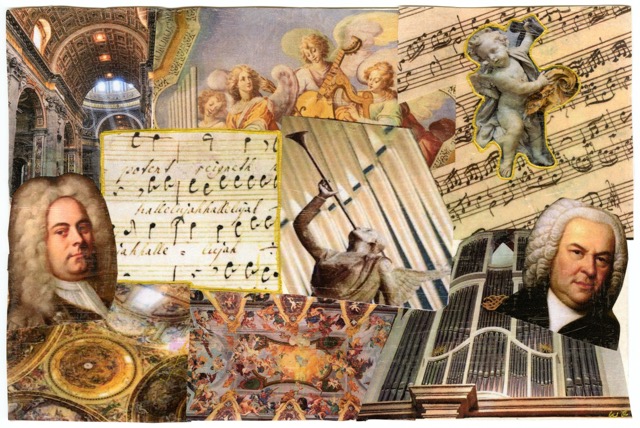
Our March concert, Baroque Brilliance, showcases the sacred mastery of two of the era’s greatest composers—Johann Sebastian Bach and George Frideric Handel—through works that highlight their contrasting yet complementary voices.
Bach’s Mass in G minor, composed in Leipzig in the 1730s, is one of his four Lutheran Masses setting only the Kyrie and Gloria. Drawing on earlier cantata material, Bach crafts a deeply reflective and refined work, rich in counterpoint and spiritual depth.
In contrast, Handel’s Dixit Dominus, written in 1707 during his time in Rome, bursts with youthful energy and dramatic flair. Setting Psalm 110 in Latin, this virtuosic and exuberant work reveals the young composer’s early command of the Italian Baroque style.
Together, these works offer a vivid portrait of Baroque sacred music at its most brilliant—intimate and majestic, disciplined and dazzling.
Guest Artists

Natalie Ingrisano, soprano

Maria Männistö, soprano

José Luis Muñoz, countertenor

Stephen Rumph, tenor

Charles Robert Stephens, baritone
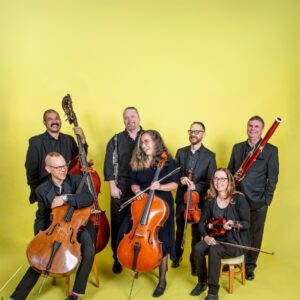 Members of the North Corner Chamber Orchestra
About the Music
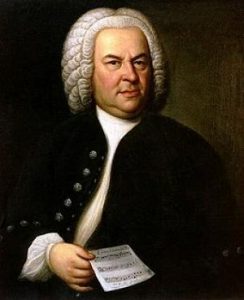
Johann Sebastian Bach
The Mass in G minor, BWV 235, by Johann Sebastian Bach is one of four Lutheran Masses that he composed in the 1730s. Unlike the full Catholic Mass settings, which set the complete Ordinary (Kyrie, Gloria, Credo, Sanctus, and Agnus Dei), these works include only the Kyrie and Gloria, the sections most commonly retained in Lutheran liturgical services.
Bach composed these mass settings during his mature Leipzig period, a time when he was producing some of his most refined sacred music. The Latin text and compact format suggest they were created for special liturgical occasions in the Lutheran church, which sometimes called for Latin settings of these portions of the Mass—particularly in academic or high feast day contexts.
The Mass in G minor is built largely from previously composed movements from Bach’s earlier cantatas, reworked with new Latin texts in a process known as parody technique. Far from being a shortcut, this method allowed Bach to recontextualize his music, deepening its theological resonance and demonstrating his mastery of text setting across languages and liturgical traditions.
Though shorter and less frequently performed than his monumental Mass in B minor, the Mass in G minor reveals Bach’s theological depth, compositional ingenuity, and expressive power in sacred music. It also offers valuable insight into Lutheran liturgical practice and Bach’s exceptional ability to adapt and refine his own music for new spiritual purposes.
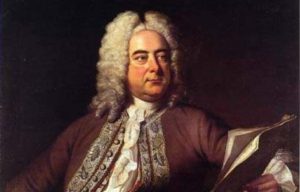
George Frideric Handel
Dixit Dominus, HWV 232, is one of George Frideric Handel’s earliest surviving sacred works, composed in 1707 during his youthful stay in Italy. At just 22 years old, Handel was immersing himself in the Italian style, and Dixit Dominus—a setting of Psalm 110 (Vulgate 109) in Latin—was likely composed for a Vespers service in Rome, possibly at the Carmelite Church of Santa Maria in Montesanto.
While in Italy, Handel was exposed to the grandeur of Catholic sacred music and the expressive potential of the Italian Baroque style. Dixit Dominus reflects this influence vividly. The piece combines dramatic choral writing, virtuosic solo passages, and a vivid orchestral palette, establishing Handel’s command of large-scale sacred works well before his English oratorios.
The work is scored for a five-part choir and five soloists, and features energetic counterpoint, expansive vocal ranges, and brilliant fugal writing. Its bold harmonic language, rhythmic vitality, and almost theatrical expressiveness show the young composer’s ambition and skill.
Handel’s Dixit Dominus stands as one of the most dazzling choral works of the early 18th century, showcasing the full expressive power of the Baroque sacred tradition. It not only affirmed Handel’s place among the great composers of his day but also foreshadowed the grandeur and drama of his later oratorios like Messiah and Saul. Despite his German roots and later English fame, this Roman masterpiece reveals the young Handel at his most fiery, ambitious, and virtuosic.