
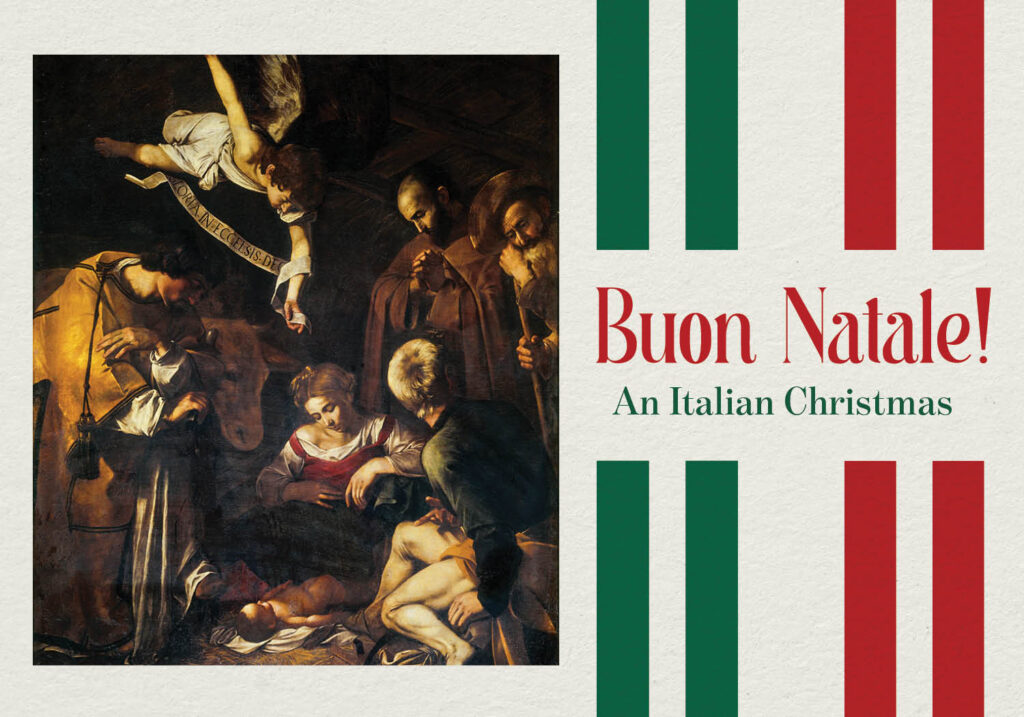
Featured Works
Laud to the Nativity by Ottorino Respighi
Christmas Songs of the Sicilian People by Francesco Paolo Frontini/arr. Howard Arman
Ave Maria by Giuseppe Verdi
Santa Lucia Traditional, arr. Barlow Bradford
Silent Night candlelight finale
Seattle
Saturday, December 5th — 8:00 pm
7:00 pm Pre-concert talk by director Freddie Coleman
7:30 pm Audience carol sing-along
Lynnwood
Sunday, December 6th — 3:00 pm
6215 196th St SW, Lynnwood
2:00 pm Pre-concert talk by director Freddie Coleman
2:30 pm Audience carol sing-along
Celebrate the beauty and spirit of the season with Buon Natale: An Italian Christmas, a choral program inspired by Italy’s sacred music and folk traditions. This festive concert moves from intimate prayer to joyful celebration, revealing the many colors of Italy’s Christmas through music both reflective and exuberant.
The program opens with Giuseppe Verdi’s Ave Maria, a deeply expressive setting of quiet reverence and serenity. From there, we enter the devotional world of Ottorino Respighi’s dramatic tableau Laud to the Nativity, which tells the wonder of the Christmas story through rich harmonic language and ancient sacred inspiration.
Next is Francesco Paolo Frontini’s Christmas Songs of the Sicilian People, arranged by Howard Arman—a vivid collection of Sicilian carols filled with folk energy, warmth, and communal joy. The program concludes with Barlow Bradford’s arrangement of Santa Lucia, a heartfelt and expressive Neapolitan hymn that brings the musical journey to a resonant close.
The evening caps off with our traditional candlelight finale, a cherished moment of shared reflection and quiet beauty that closes the concert in a spirit of peace and togetherness.
Guest Artists

Ellaina Lewis, soprano (Angel)
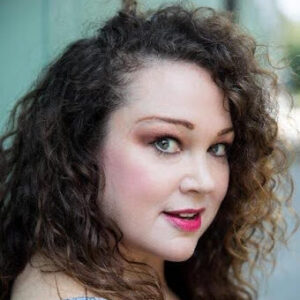
Heidi Vanderford, mezzo-soprano (Mary)

Stephen Rumph, tenor (Shepherd)
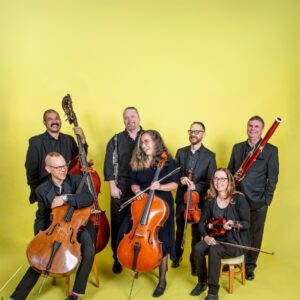 Woodwinds from North Corner Chamber Orchestra
About the Music
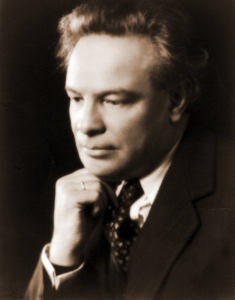
Ottorino Respighi
Ottorino Respighi’s Laud to the Nativity (1928) is a choral cantata that looks backward in time even as it speaks in the lush harmonic language of the early 20th century. Written for mixed chorus, vocal soloists, and six woodwinds, the work draws on medieval and Renaissance-era Italian devotional poetry, shaping them into a continuous meditation on the Nativity.
Respighi’s interest in early music—so evident in his Roman trilogy and other works—here finds a particularly intimate expression, focused on the mystery and reverence surrounding the birth of Christ.
The work unfolds as a sequence of contrasting tableaux rather than a single continuous narrative. Solo voices and chorus alternate in reflecting different facets of the Nativity story: awe, humility, joy, and contemplation. Respighi’s orchestration is both delicate and richly colored, often evoking the atmosphere of ancient chant or early polyphony while surrounding it with impressionistic harmonic shading. The result is music that feels at once historically distant and emotionally immediate.
What makes the Laud especially compelling is its ability to bridge devotional simplicity with sophisticated modern craft. The stylized archaic texts are never treated as museum pieces; instead, they become living expressions of wonder and devotion. Through shifting textures, luminous instrumental writing, and deeply expressive choral passages, Respighi creates a work that invites listeners into a contemplative space—one that feels rooted in tradition yet vividly present in sound.
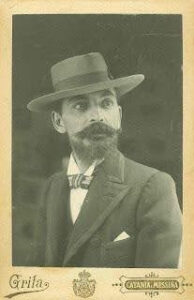
Francesco Paolo Frontini
Composer
My purpose in writing the present arrangements was to create a cycle which might either stand alone, or serve as a companion piece to Respighi’s Laud to the Nativity (1930). A striking feature of Respighi’s wonderful work is its instrumentation: six idiomatically ‘pastoral’ woodwind instruments, piano duet and triangle. It is a grouping well suited to portraying both the traditional idea of ‘shepherds’ music’, and the drama associated with the Christmas story. Ironically, it is this most captivating aspect of the Laud, its unique instrumentation, together with the work’s beautiful conciseness, which must, I suspect, have dissuaded many a choral conductor from including it in a Christmas concert. Having assembled such an unusual instrumental ensemble for a relatively short work, what else can one perform with it?
Francesco Paolo Frontini (1860-1939) was a compatriot and contemporary of Ottorino Respighi (1879-1936). Between the years of 1883 and 1939 he published five collections of popular, that is to say, folk music of his native Sicily. The final one of these, described by him as reflecting “the mystical aspect of the soul of the Sicilian people”, bears the title Canti Religiosi del Populo Siciliano. It consists of two sets of songs familiar to Frontini from the playing and singing of folk musicians in towns and villages. For each song he wrote a piano accompaniment, and provided Italian words as an alternative to the original regional dialect texts. The result is folkloristic, authentically romantic and quite lovely in its simplicity: an ideal foil, in fact, for Respighi’s great Laud.
The first group of Canti Religiosi contains eleven Christmas songs for voice and piano. For the present work, Canti di Natale del Popolo Siciliano, I have selected eight, and orchestrated them for the same combination of instruments as is required by Respighi. In so doing, I have consciously created a set of songs which may be performed together or singly: beside music for the entire ensemble, there are pieces for varied scorings: choir a cappella, voices with pianos, and instruments alone. My instrumental accompaniments and choral transcriptions respect both the spirit and the letter of Frontini’s piano harmonizations. His piano parts are simple, yet colorful and inventive so that, while the purpose of his song collections may have been, in part at least, a musicological one, it is actually through the prism of his own personality as a composer that we see the tunes of an oral tradition notated and preserved.
In orchestrating and otherwise adapting these I have, of course, made changes and additions – but always with the intention of preserving, as closely as possible, the essence of the originals which are, after all, arrangements in themselves.
Howard Arman
Vienna (2026)

Howard Arman
Arranger
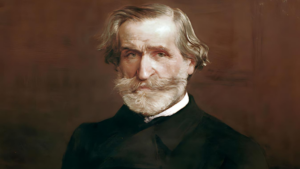
Giuseppe Verdi
Giuseppe Verdi’s Ave Maria is the first of his Quattro pezzi sacri (Four Sacred Pieces), composed in the final decade of his life (completed in 1889 and revised shortly after). Unlike his earlier operatic works, this setting of the Latin prayer is striking for its austerity, restraint, and contrapuntal craft, reflecting Verdi’s late-career engagement with sacred text in a more introspective idiom.
The piece is written for unaccompanied mixed choir and is built on a highly unusual compositional challenge: Verdi constructs the entire work on a scale derived from the enigmatic “scala enigmatica”—a deliberately unstable, chromatic sequence that he discovered in a Milanese musical journal. Each voice enters in imitation, creating a tightly controlled contrapuntal texture that feels both rigorous and unsettled, as if the music is continuously searching for tonal grounding.
Despite its technical complexity, the emotional effect is surprisingly direct. The setting avoids operatic grandeur and instead emphasizes fragility, suspended harmony, and a sense of quiet urgency. Phrases rise and fall in overlapping lines that often delay resolution, mirroring the pleading quality of the prayer itself.
Within the context of the Quattro pezzi sacri, the Ave Maria stands apart as the most contrapuntally dense and intellectually constructed movement, yet it also signals Verdi’s late-life turn toward spiritual reflection—an unexpected counterpart to the dramatic intensity of his operas.