
Featured Works
On Christmas Eve by Vilnis Salaks
Christmas Cantata “Slow to Come and Quickly Gone” by Laura Jēkabsone
Our Lord’s Nativity by Rihards Dubra
Seven O Antiphons by Andris Sējāns
Silent Night finale sung by candlelight
Seattle
Saturday, December 6th — 8:00 pm
7:00 pm Pre-concert talk by director Freddie Coleman
7:30 pm Audience carol sing-along
Lynnwood
Sunday, December 7th — 3:00 pm
6215 196th St SW, Lynnwood
2:00 pm Pre-concert talk by director Freddie Coleman
2:30 pm Audience carol sing-along
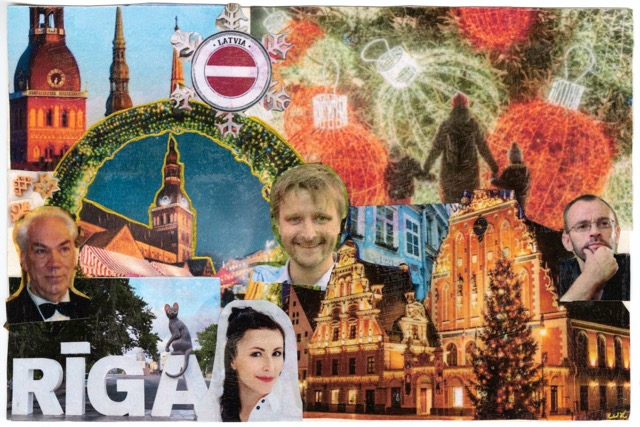
A Latvian Christmas is a vibrant blend of Christian traditions and ancient pagan customs. While the holiday celebrates the birth of Christ with church services, carols, and festive meals, it also preserves centuries-old winter solstice rituals. These include mummers’ parades, fortune-telling, and the burning of logs to chase away evil spirits and welcome the sun. This unique fusion creates a rich and magical atmosphere that reflects Latvia’s deep cultural roots and seasonal spirit.
The works of the four Latvian composers featured on this program offer a musical journey through centuries of Latvian Christmas traditions, reflecting both sacred and folk influences that continue to shape the nation’s holiday celebrations.
Guest Artists
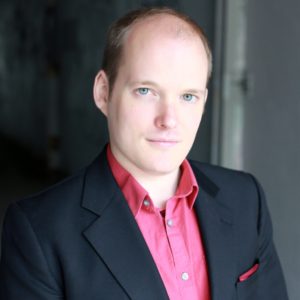
Zach Finkelstein, tenor
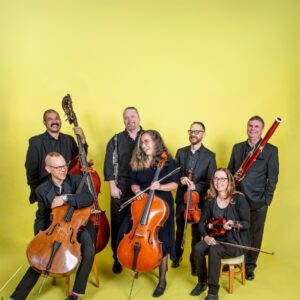 Members of the North Corner Chamber Orchestra
About the Music
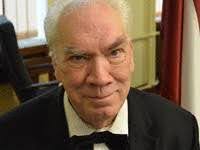
Vilnis Salaks
On Christmas Eve by Vilnis Salaks draws from the country’s rich folk and seasonal traditions. Salaks, a 20th-century Latvian composer and conductor, is known for his contributions to choral music in Latvia, especially through his arrangements and original works rooted in Latvian folklore.
This particular piece, Ziemassvētku vakarā (translated On Christmas Eve), reflects the serene, mystical atmosphere of a Latvian winter night. It often evokes imagery of candlelight, snow-covered landscapes, and quiet village life.
Salaks’ music is especially appropriate in a concert that honors Latvian Christmas traditions, combining ancient stillness with the warmth of community singing.

Laura Jēkabsone
Laura Jēkabsone offers a contemporary, introspective take on the Christmas narrative—conveying both the timelessness and the transience of the season. Her cantata “Slow to Come and Quickly Gone” evokes a mood of quiet reflection, suggesting a meditative opening that unfolds into an emotional arc—one that moves from anticipation to the fleeting nature of sacred moments.
Celebrated for her fusion of Latvian folk-inspired lyricism and modern choral technique, Jēkabsone brings these qualities to the forefront in this evocative Christmas cantata. Her writing features expressive soliloquies for solo voices, mirrored by lush, atmospheric orchestral textures. These personal moments are interwoven with choral passages that lend the work a sense of communal ritual and spiritual intimacy.
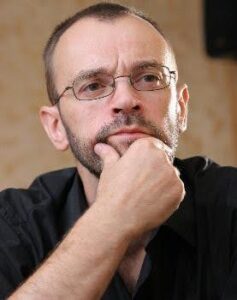
Rihards Dubra
Rihards Dubra is recognized as a leading voice in contemporary sacred music. Rooted deeply in Christian faith, his style is contemplative and spiritual, drawing on ancient liturgical traditions while using modern harmonic language. Our Lord’s Nativity exemplifies his idea of “sacred, pure music” that transcends aesthetics to create a space for spiritual encounter.
Written for choir and chamber orchestra, the cantata captures the profound stillness and mystery of the nativity scene. Unlike more jubilant Christmas works, it is reflective and inward-looking, featuring slow harmonic progressions, chant-like melodies, and transparent textures that invite reverence and contemplation. Its deliberate pacing allows silence to become part of the musical fabric, echoing the styles of Arvo Pärt and John Tavener.
The choral writing, often modal and subtly dissonant, evokes medieval plainsong simplicity, supported by a gentle orchestral accompaniment that forms a luminous halo around the voices—much like light surrounding the manger. The result is a timeless musical meditation on the divine mystery of Christ’s birth.
Our Lord’s Nativity stands as a modern sacred masterpiece, offering a solemn and spiritual counterpoint to more festive Christmas carols and anchoring the repertoire in stillness and awe.

Andris Sējāns
Andris Sējāns’s Seven O Antiphons reimagines medieval liturgical texts with contemporary Latin choral writing. The Seven O Antiphons are a set of ancient Latin texts sung during the seven days preceding Christmas Eve, from December 17 to 23, traditionally at Vespers. Each antiphon begins with the vocative “O” followed by a Messianic title for Christ, such as O Sapientia (O Wisdom), O Adonai (O Lord), and O Emmanuel (O God with us). These antiphons have been cherished for centuries as profound expressions of Advent longing and hope, embodying a deep spiritual anticipation for the coming of Christ.
These texts have inspired many musical settings throughout history, including the well-known Advent hymn “O Come, O Come, Emmanuel.” Sējāns culminates his work with the luminous “O Emmanuel,” which unites choir and instruments in a moment of transcendent communion.
Andris Sējāns’s Seven O Antiphons contributes a uniquely Baltic voice to the long tradition of Advent music. It combines reverence for ancient liturgical practice with a fresh, contemporary musical language, making it a compelling work for both sacred services and concert performances during the Advent and Christmas season.