
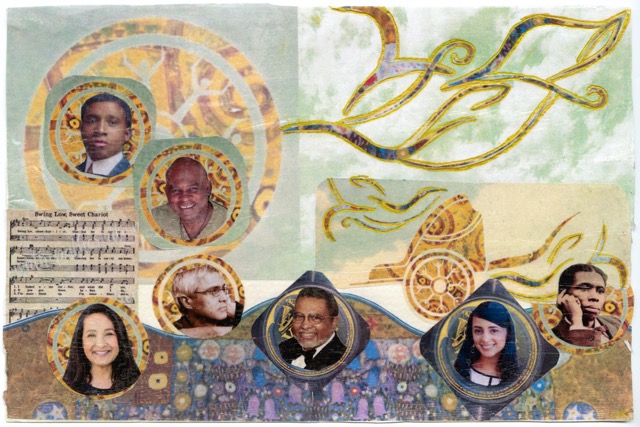
Saturday, June 6, 2026 at 8:00 pm
With pre-concert talk at 7:00 pm by director Freddie Coleman
1111 Harvard Avenue, Seattle
Featured Works
Chariot Jubilee by R. Nathaniel Dett
Mass by Steve Dobrogosz
Three Dunbar Hymns by Adolphus Hailstork
The Love of Thousands by Reena Esmail
Online ticket sales have closed. Tickets are available at the door when the box office opens at 6:00 pm.
Join us in June for an inspiring evening of music that celebrates faith, heritage, and the power of the human spirit. This unique concert brings together four deeply moving works by composers from different backgrounds, each offering a fresh and personal take on sacred music.
Nathaniel Dett’s Chariot Jubilee combines classical music with the rich tradition of African American spirituals, creating a powerful tribute to freedom and hope. Steve Dobrogosz’s Mass brings the Latin Mass to life with striking jazz harmonies, making something traditional feel new and heartfelt. In Three Dunbar Hymns, Adolphus Hailstork sets the poetry of Paul Laurence Dunbar to music that is both soulful and dignified, honoring the voice of one of America’s great Black poets. Reena Esmail’s The Love of Thousands blends Western choral music with the sounds of Indian classical music in a glowing tribute to ancestry, memory, and the quiet strength passed down through generations of women.
Together, these pieces create a vibrant, heartfelt journey through sacred music as seen—and heard—through today’s diverse and deeply human voices.
Guest Artists

Victor Morris, tenor

Geisa Dutra, piano
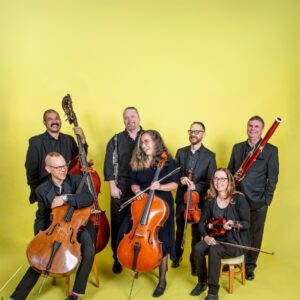 Members of the North Corner Chamber Orchestra
About the Music
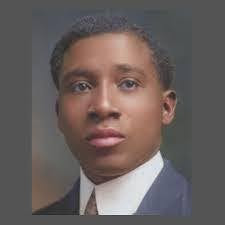
R. Nathaniel Dett
Chariot Jubilee is a landmark in American music—a bold fusion of African-American spiritual tradition and classical form. Composed between 1919 and 1921, it stands among the first large-scale choral–orchestral works to be built upon a spiritual, in this case the beloved “Swing Low, Sweet Chariot.”
Dett, a Canadian-born composer and one of the most influential Black musicians of the early 20th century, sought to elevate the spiritual to the concert stage. In this piece, he weaves together Biblical texts, original poetry, and the language of the Black church to create a vivid musical vision of heavenly deliverance and spiritual freedom.
A tenor soloist takes on the role of prophetic voice, while the choir and orchestra alternate between intimate reflection and exultant jubilation. Dett’s score moves fluidly from lush Romantic harmonies to call-and-response rhythms and fugue-like choral textures, culminating in a triumphant “Hallelujah.”
After its 1921 premiere by the Syracuse University Chorus, Chariot Jubilee was lost for decades until it was reconstructed in the late 20th century. Its revival has helped reclaim Dett’s legacy as a pioneer who gave voice to African-American musical identity within the concert hall.
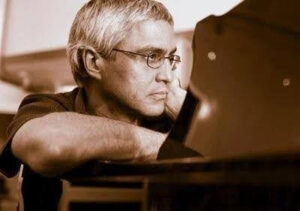
Steve Dobrogosz
Steve Dobrogosz’s Mass is a radiant and deeply lyrical setting of the traditional Latin Mass text, composed in 1992. Born in the United States and long based in Sweden, Dobrogosz is a genre-crossing composer whose background in jazz and popular music informs his distinctive compositional voice. In this work, he offers a fresh and accessible interpretation of the ancient liturgy—rich in emotional nuance, melodic warmth, and harmonic color.
Unlike many contemporary Mass settings that emphasize complexity or abstraction, Dobrogosz’s Mass is disarmingly direct and expressive. Scored for choir and piano, with a string ensemble, the work blends classical choral writing with elements of jazz, gospel, and popular song. The result is music that is reverent but never austere—spiritual, yet unmistakably human.
Each movement of the Mass—Kyrie, Gloria, Credo, Sanctus, Benedictus, and Agnus Dei—unfolds with clarity and beauty, drawing listeners into a sound world that feels both timeless and contemporary. The Mass has gained international popularity, especially in Scandinavia and Europe, and has become one of Dobrogosz’s most frequently performed works.
Whether in a cathedral or concert hall, Dobrogosz’s Mass resonates with sincerity, offering a moving and modern expression of faith through music.

Adolphus Hailstork
Adolphus Hailstork’s Three Dunbar Hymns sets to music the poetry of Paul Laurence Dunbar, one of the first African-American poets to gain national recognition. Composed in 2005, this stirring choral work honors the spiritual depth and poetic richness of Dunbar’s verse while drawing on Hailstork’s signature blend of classical form, African-American idioms, and expressive choral writing.
The three movements—“Listen to the Lambs,” “Lord, I Cannot Let Thee Go,” and “In the Morning”—echo the devotional intensity of traditional spirituals, but are crafted with a composer’s modern sensibility. Hailstork sets Dunbar’s sacred texts with sensitivity and clarity, emphasizing their emotional weight and lyrical grace.
Hailstork, one of America’s leading composers, has often turned to African-American texts and themes as a way to both honor heritage and shape new expressions of identity in concert music. In Three Dunbar Hymns, he channels the eloquence of Dunbar’s language into a musical tribute that is heartfelt, accessible, and enduring.

Reena Esmail
Composed in 2022, The Love of Thousands by Reena Esmail is a powerful meditation on memory, ancestry, and the unseen bonds that connect us across generations. Written for a cappella choir, the piece draws its title from the poetic phrase: “You are the result of the love of thousands,” a reminder that each of us stands on the shoulders of those who came before.
Esmail—an Indian-American composer celebrated for her unique fusion of Western classical and Indian musical traditions—crafts a work that is both intimate and expansive. Drawing inspiration from the Hindu concept of śrāddha (a ritual of honoring one’s ancestors) and the Mexican tradition of Día de los Muertos, The Love of Thousands explores how we remember and celebrate those we’ve lost—not through grief alone, but with reverence, color, and gratitude.
The music unfolds in shimmering textures and lyrical lines, alternating between moments of quiet reflection and luminous intensity. The choir often sings in close harmony, evoking a sense of communal breath and shared spirit.
Esmail’s gift lies in writing music that transcends cultural boundaries while remaining deeply personal. The Love of Thousands is a sonic offering—a choral prayer for connection across time, space, and soul.